Feb 2, 2005, 6:07 PM

Part 1

On the Threshold of the 8th Decade of Tehran University of Medical Sciences

From Dar-ul Fonoun (House of Technology) School to Tehran University of Medical Sciences: a golden phase in the history of medical sciences in Iran

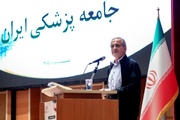
The Tehran University of Medical Sciences arrives at the 70th anniversary of its establishment, having been the source of a great number of medical services. Following is a brief report on the history of the university:


Since the beginning of the modern era, the idea of founding a university in Iran and Tehran had occupied the minds of a great number of Iranian experts. All these experts believed that establishing a university in Iran was one of the ways to provide modern sciences and technology to this underdeveloped land of the Qajar dynasty.


The Dar-ul Fonoun (House of Technology) School in Tehran was the first scientific building to be built in Iran in a modern style. In the beginning, medical sciences, chemistry, military sciences, engineering, and mining were taught at Dar-ul Fonoun, but some other courses like physics, literature, and political science were later added to the curriculum.


Afterwards, in the year 1298 (1919), Dar-ul Mo’alemin (House of Teachers) was founded in Tehran to educate teachers. This teacher education center was later transferred to Bagh-e Negarestan in 1311 (1932) and its name was changed to Danesh Saray-e A’li (The Higher Education Academy).


The idea of founding a university in Tehran was seriously pursued starting in 1307 (1928). The idea was discussed in the Majlis several times, but due to the lack of sufficient funding and facilities, the task was postponed. In 1310 (1931), the first bill on founding a university was compiled, but after being approved by the Majlis it was cancelled due to a change in the cabinet.


In 1312 (1932) the bill on founding a university was sent to the Majlis once again, and on Khordad 8, 1313 (May 28, 1934), was ratified by an absolute majority. In the second article of the ratified bill, the university was divided into six faculties: the humanities; natural sciences and mathematics; literature; philosophy and pedagogy; medical sciences and related fields; law; and political, economic, and technical sciences.


After being ratified by the Majlis, the university was given a license to conduct activities. But no decision was made on exactly where to begin the project. On the order of the Ministry of Education, since the building of the university was not ready, some temporary buildings were selected to host the different faculties of the university in the interim period. The Danesh Saray-e A’li building in Bagh-e Negarestan was chosen to host the two universities of literature and sciences. The universities of law, political, and economic sciences were set up in a building in Atabak Alley, which later became the Adib High School, and finally the house of Dr. Hossein Mo’tamed was selected to host the University of Medical Sciences.


In northwestern Tehran there was a garden called Jalalieh that was purchased by the Ministry of Education. Fencing off the garden was the first measure taken and these fences are still regarded as the boundaries of the Tehran University of Medical Sciences.


Reza Shah Pahlavi attended the groundbreaking ceremony of the university on Bahman 15, 1313 (February 3, 1935), and the cornerstone of the first faculty of the university was laid on the same day.


The first faculty to be built in the complex of Tehran University was the faculty of Medical Sciences. This faculty is still located in the northern part of the university campus. The autopsy hall of the faculty, built in Khordad 1314 (May-June 1935), was the first building of the university.


The first chancellor of the university was Ali Asghar Hekmat, the former minister of education. But the first independent chancellor of the university was Dr. Ali Akbar Siasi. During Dr. Siasi’s term in office, the number of faculties increased and University Lane was constructed as a university town.


In 1327 (1948), the university was scheduled to begin the new educational year on Bahman 15 (February 3), but it was postponed until Mehr 1 (September 22) due to an assassination attempt against Mohammad Reza Shah Pahlavi.


The Tehran University of Medical Sciences was later separated from Tehran University, and, as an independent university, trained a great number of professional physicians.


Currently, this university consists of eight faculties: medical sciences, dentistry, pharmaceutics, health care, nursing, obstetrics, paramedic science, and the Abu Reyhan Rehabilitation Faculty. There are 10,000 students in the university and 1300 faculty members, who are busy educating professional physicians.


The Tehran University of Medical Sciences, which is the country’s greatest center of medical research and special services, includes 25 research centers in Tehran, 15 research centers in 10 other provinces, and 16 educational hospitals.


The Tehran University of Medical Sciences is currently on the threshold of the 70th anniversary of its establishment and now is entering a new decade of educational and research activities.


(To Be Continued)


SA/HG

End


MNA
News ID 10230

Your Comment

You are replying to: .
  • captcha